Crispy Batter-Dipped Fish Recipe – Crisp, Flaky, & Better Than Takeout!
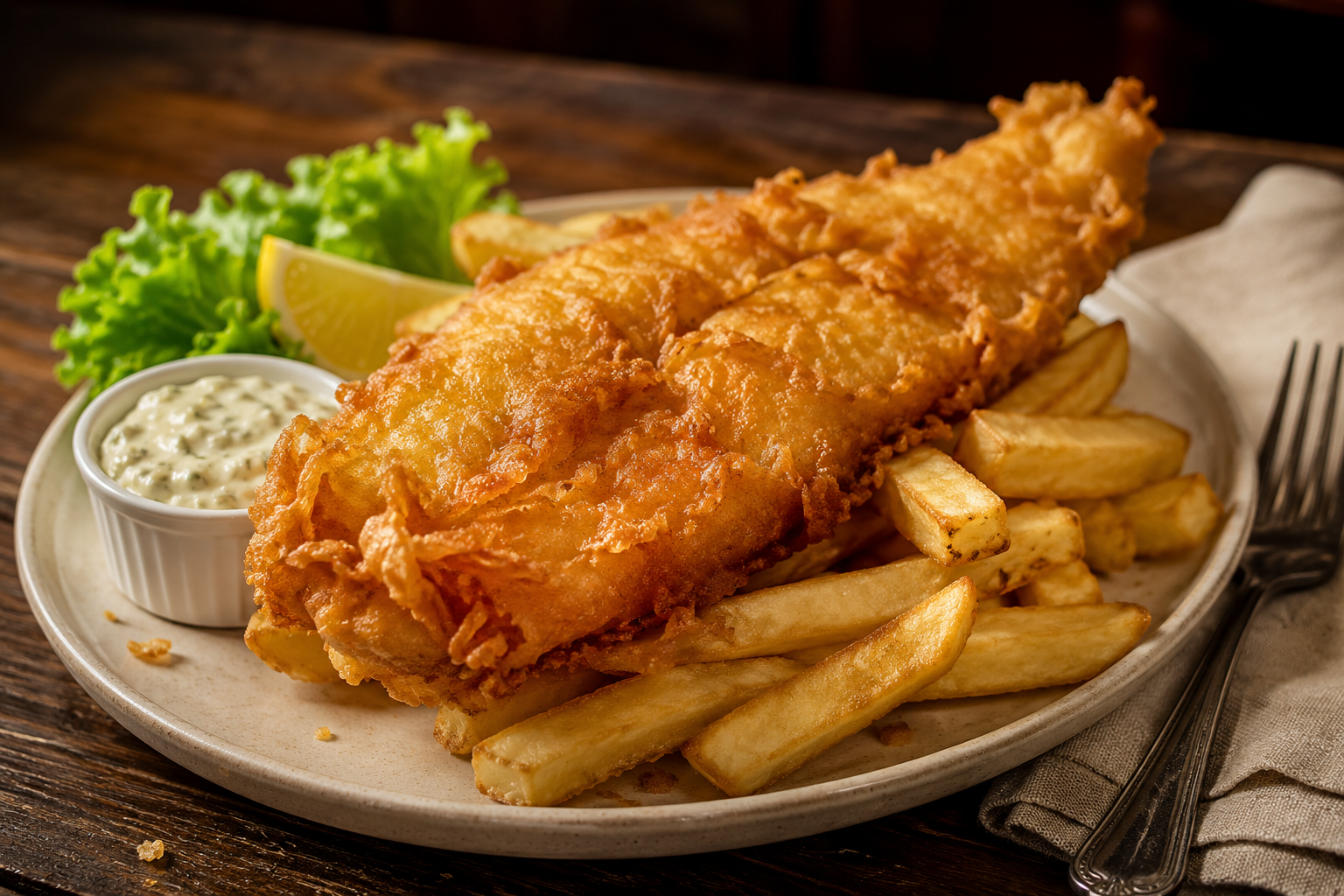
There is nothing quite like breaking open a layer of perfect crispy batter and seeing that delicious, tender fish inside. A Crispy Batter-Dipped Fish Recipe goes beyond just the fish; it involves the perfect combination of crispy and tender.
After being annoyed by some less-than-ideal takeout fish, I decided to try to recreate it at home. Sometimes the batter would be thick and greasy; other times it would simply slip right off the fish. After trying many different things, I figured out that there is a lot more to a good batter than just the ingredients themselves.
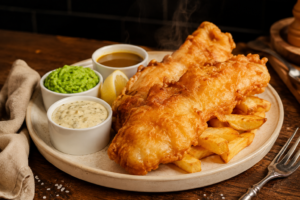
The first time I tried to replicate that restaurant-style batter, I ended up making it way too thick. As a result, the batter got all clumped on the fish and fried into this really heavy coating, which totally overshadowed the delicate fish flavor. Now, I aim for a batter that is similar to thick pancake batter.
This Crispy Batter-Dipped Fish Recipe will give you light, crispy fish with a perfect flaky center! Here’s how to get it.
Ingredients You Will Need
Fish Fillets
- 1.5 pounds (680 g) of white fish fillets such as cod, haddock, pollock, or halibut
- 1 tsp salt (6 g)
- 1/2 tsp black pepper (1 g)
Cod – One of the best options since it stays moist and develops beautiful flaky layers. Crispy Batter
- 1 cup of rice flour (120 g)
- 1/2 cup of cornstarch (60 g)
- 1 tsp of baking powder (4 g)
- 1 tsp salt (6 g)
- 1/2 tsp garlic powder (1 g)
- 1 cup of ice-cold sparkling water (240 ml)
Rice flour – Provides a very crispy crust and works great as a fish-and-chips crust.
Sparkling water – Carbonation helps form bubbles in the batter, providing more crispiness.
For Frying
- Vegetable or canola oil for frying (around 1.5 L)
Neutral oil – Choose oil with a high smoking point to achieve the best frying result.
How to Prepare Fish
Dry the fish fillets with paper towels.
Yes, it may seem unnecessary, but excess moisture will prevent the batter from sticking properly.
Cut large fillets into portions.
Season them lightly with salt and pepper.
The fish should be dry to the touch but still moist and fresh.
Another thing I’ve learned after trying to cook fried fish dozens of times – moisture kills crispy batter.
Pro tip: If your fish was in the fridge, leave it for around 15 min to warm up before frying.
Mix Dry Ingredients
Place in a large bowl and whisk together:
- Rice flour
- Cornstarch
- Baking powder
- Salt
- Garlic powder
The mixture should be even, without any baking powder chunks.
At this point, it doesn’t really smell of anything, but it’s the perfect foundation for your crispy coating.
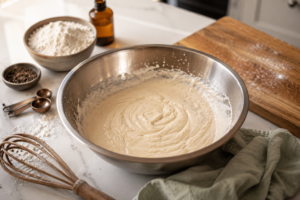
Prepare the Batter
Slowly mix in the sparkling water while whisking the dry mixture.
Mix until the batter is well-combined.
It should be thick enough to coat the back of the spoon.
One thing I’ve done wrong many times – over-whisking the batter. This gives it structure, which makes it heavier.
Small lumps are totally ok.
Actually, it can help in achieving lighter texture.
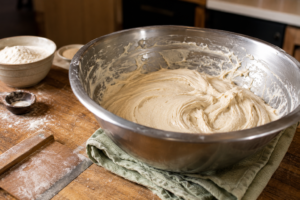
Pro tip: Keep the batter cold until the moment you’re going to fry the fish.
Heating the Oil
Fill the deep pan or a Dutch oven with the oil.
Heat the oil to 350°F (175 °C).
If you don’t have a thermometer, place a tiny bit of batter in the oil.
It should start to float right away and start to bubble.
The oil should look calm and active but shouldn’t be smoking.
You can recognize properly heated oil by the gentle bubbling.
This temperature is the key to this whole recipe.
If it’s too cool, the fish will absorb a lot of oil.
If it’s too hot, the coating will burn before the fish cooks through.
Coating the Fish
Dip each fillet into the batter.
Let it sit in the batter for a few seconds to let the excess batter drip off.
The coating should be light and relatively thin.
You don’t want your fish to be heavily coated with the batter.
This will give you that iconic restaurant-style crispy batter.
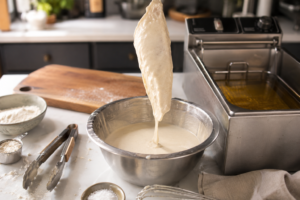
Pro tip: Baste the fish right before frying, rather than baste all at once.
Fry the Fish Until Golden Brown
Gently place the battered fish into the hot oil.
Cook in batches.
Overcrowding the pan lowers the temperature of the oil, which results in a loss of crispiness.
The second you place the fish in the oil, you will hear those cheerful bubbling sounds.
Exactly what we need!
The coating starts to puff right away.
Fry for 4-6 min depending on the thickness of the fish.
Flip occasionally for even browning.
The fish should become rich golden brown with a slightly rugged surface.
The smell at this point is fantastic.
You will smell that perfect combination of toasty batter and perfectly cooked fish.
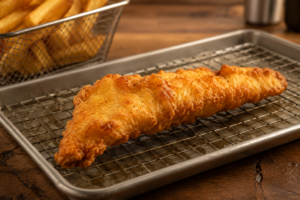
After frying, place the fish on a wire rack to drain.
The coating should be crispy to the touch with the help of tongs.
Resting Period
Rest the fish for several minutes before serving.
This will help to drain the excess oil and keep the crust crispy.
One thing I’ve found is that putting fried fish right on the paper towel sometimes traps the steam underneath.
Wire racks work much better.
The coating remains crispy all around the fish.
Why This Batter Works
A lot of fish batter recipes rely heavily on all-purpose flour.
This recipe uses rice flour and cornstarch to make a lighter texture.
Rice flour provides crispiness.
Cornstarch provides delicate crunchiness.
Baking powder adds little pockets of air.
Ice-cold sparkling water helps the batter to puff while frying.
All these components come together to create that famous fish-and-chips coating.
Mistakes to Avoid
Using Warm Batter
The Mistake:
Making the batter with room-temperature liquid.
Reason:
It’s easy.
Avoiding it:
Use ice-cold sparkling water.
Overcrowding the Fryer
The Mistake:
Adding too many pieces at once.
Reason:
Wanting to save time.
Avoiding it:
Cook in batches to keep the temperature of the oil high.
Not Using the Drying Step
The Mistake:
Making batter with wet fish.
Reason:
Many people skip this part.
Avoiding it:
Dry the fish properly before basting.
Over-mixing the Batter
The Mistake:
Whisking until it’s smooth.
Reason:
People think smooth batter is better.
Avoiding it:
Whisk until it’s well-combined.
Wrong Temperature
The Mistake:
Guessing the temperature instead of using the thermometer.
Reason:
Lack of the tool.
Avoiding it:
Keep approximately 350° F (175° C) throughout the process.
Ways to Change It Up
Spicy Crispy Fish
Add 1/2 tsp of cayenne pepper to the batter.
This spicy taste balances perfectly with the mild fish.
Herb Batter Fish
Add dried herbs such as dill, parsley, or chives to the dry ingredients.
This will provide the aromatic coating.
Beer Batter
Replace the sparkling water with cold beer.
It will provide a richer taste while keeping the crispiness.
How to Store and Serve
Refrigerator
Leftovers can be stored in an airtight container for up to 2 days.
Freezer
Cooked fish can be frozen for up to 2 months.
Reheating
Reheat in the oven or air fryer at 375°F (190 °C) until crispy.
Don’t microwave since the coating becomes soggy very quickly.
Best Serving Ideas
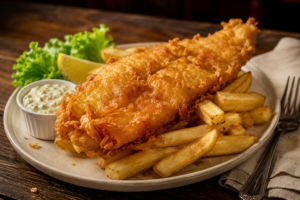
- French fries
- Coleslaw
- Tartar sauce
- Malt vinegar
- Lemon wedges
- Garden salad
- Roasted vegetables
Frequently Asked Questions
What is the best fish for batter-dipped fish?
Cod, haddock, pollock, and halibut are all great options since they stay flaky and moist after frying.
Why isn’t my batter crispy?
Most likely the batter was too warm, the oil wasn’t heated properly, or the fish was overcrowded during frying.
Can I make the batter ahead of time?
It’s better to prepare it right before frying.
Can I use gluten-free ingredients?
Yes. Rice flour and cornstarch are great for gluten-free batter.
How do I know when the fish is done?
The coating should be golden brown, and the fish flakes easily with the help of a fork.
There is a reason why battered fish has remained popular for generations. The combination of crispy and tender never stops being amazing. Each time I make this Crispy Batter-Dipped Fish Recipe, it’s always gone instantly, especially when served with fries and lots of lemon wedges. Hope it will be a regular on your menu as well.