Chickpea Zucchini Pasta – Yummy, Tasty, And Versatile Dish!
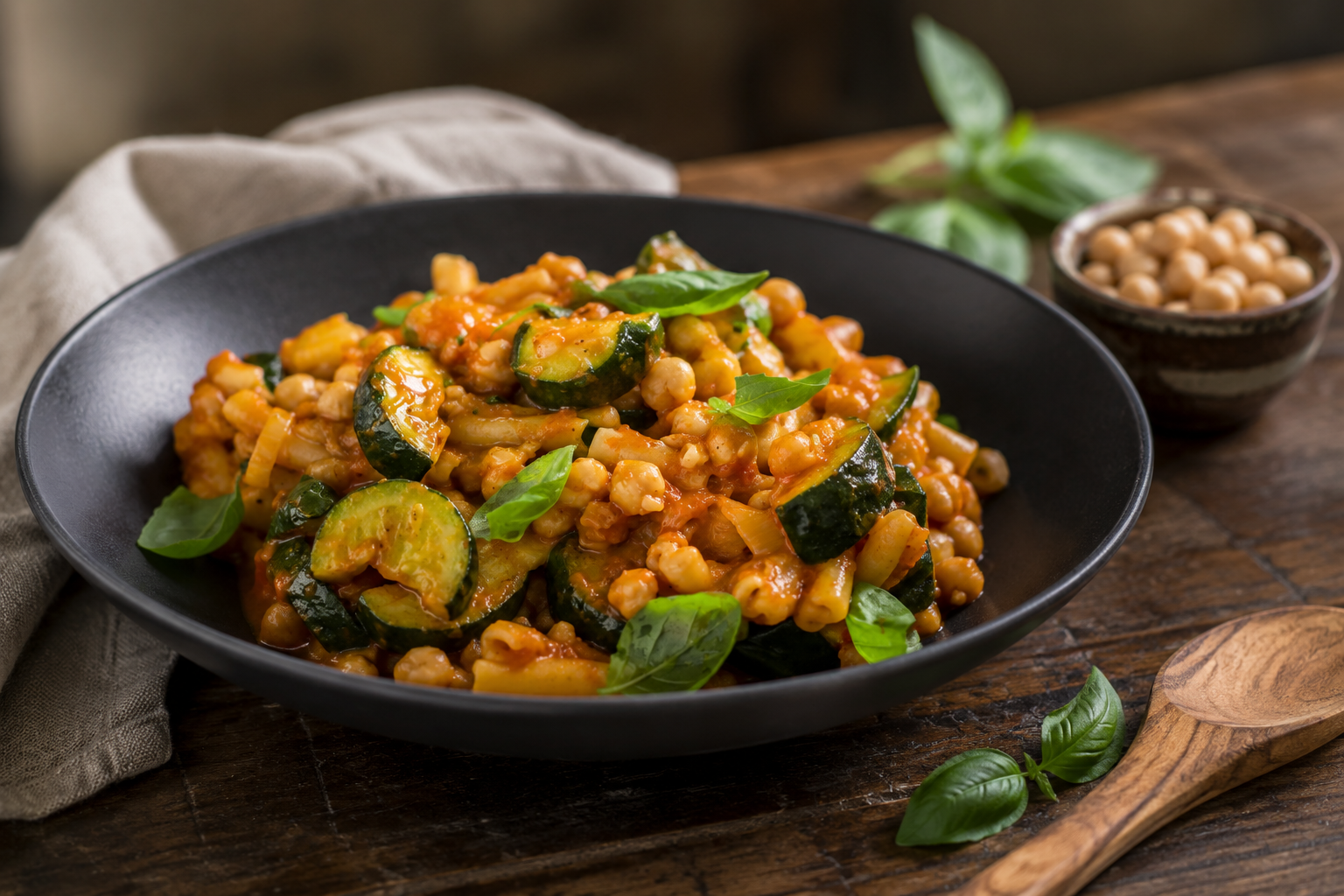
Sometimes, some recipes are so simple, yet comforting, that you instantly feel confident about making them again. This chickpea zucchini pasta is one of them, as the combination of tasty flavors, healthy ingredients, ease of preparation, versatility, and convenience simply makes it perfect! In fact, it’s the kind of recipe that became my absolute favorite recently!
This pasta appeared on my menu when I suddenly realized I needed to empty the fridge before heading to the grocery store. I didn’t have much left – some zucchini, a pack of pasta, and some canned chickpeas at hand. However, once I noticed the scent of simmering garlic, onions, and oregano, I felt this was something worth giving another try. After mixing everything with olive oil and basil leaves, I was convinced that this would stay on my dinner menu for many days to come.
Ingredients
- For the 200 g (1 cup) dry casarecce pasta
- 10 cups of ps water
- 2 teaspoons salt
Casarecce pasta, with its unique twist shape,e is an excellent choice for capturing tomato sauce. But you can use any other pasta or a similar type – for example, penne or fusilli.
For the Zucchini
- 400g (3 cups) zucchini, cut into 1/2 inch pieces
- 1/2 tablespoon olive oil
- 1/4 teaspoon salt
Zucchini shouldn’t turn mushy during cooking because this will make the pasta become watery.
For the Sauce
- 2 1/2 tablespoons olive oil
- 175g (1 1/2 cups) onions, sliced
- 30g (2 to 2 1/2 tablespoons) garlic, finely minced
- 1/4 to 1/2 teaspoon chili flakes, to taste
- 300ml (1 1/4 cups) passata or tomato puree
- 2 cups (1 can) cooked chickpeas, drained and rinsed
- 1 teaspoon dried oregano
- 1/4 teaspoon sugar
- Salt, to taste
- 1/2 cup (125ml) water.
A small quantity of sugar will help to soften the acidity of the tomato.
For the Garnish
- 1/4 to 1/3 cup reserved pasta water, if necessary
- 24g (1 cup) fresh basil leaves, chopped
- 1 teaspoon freshly ground black pepper
- 1/2 tablespoon extra virgin olive oil for drizzling
Fresh basil leaves are the key ingredient that adds freshness to this hearty dish.
Cook the Pasta
Place a large pot of water on the stovetop and bring to a boil. Add a lot of salt because it’s your first step toward creating an amazing flavor.
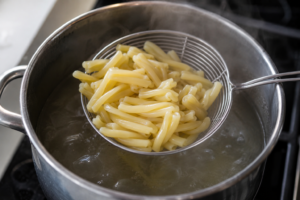
Next, put in the dry pasta and cook according to the packaging guidelines. Your pasta should still be slightly chewy inside.
In my first attempt, I ended up overcooking the pasta by 2 minutes, which resulted in mushiness while simmering the sauce. To avoid this mistake again, check on the pasta regularly and remove it just before becoming al dente.
Also, prior to straining, set aside 1 cup of pasta water to be used later.
Tip: Pasta water already contains some salt, so don’t be tempted to salt the sauce.
Brown the Zucchini
Heat a large skillet over medium-high heat and pour the olive oil into the pan. As soon as it starts shimmering, add the chopped zucchini in a single layer.
Leave the zucchini undisturbed for a couple of minutes. Notice how the outer edges start to turn golden,n adding lots of flavor. It should smell like roasted instead of steamed vegetables.
Add in the salt and continue cooking for another 30 seconds.
Zucchini should have a slight bite when transferring it onto a plate.
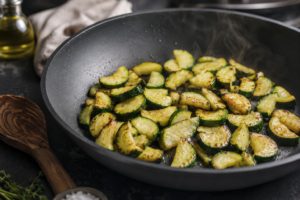
Tip: Don’t overcrowd the pan because the zucchini pieces won’t brown but will be steamed.
Make the Tomato Chickpea Sauce
Use the same skillet and add olive oil, onions, garlic, and chili flakes.
Cook the vegetables for 5 to 6 minutes over medium heat until onions are tender and lightly golden,n while the garlic releases a savory smell instead of a sharp one.
In my experience, low heat works best because garlic easily catches the fire.
Finally, add the following ingredients to the pan and mix well:
- Passata
- Chickpeas
- Oregano
- Salt
- Sugar
- Water
Increase the heat to medium-high and allow the sauce to simmer vigorously. The sauce will become thicker with bubbles forming on its surface.
Reduce the heat, cover the pan, and simmer for 8 minutes. The chickpeas will absorb the flavors, while the tomatoes will lose their acidity due to prolonged exposure to heat.
Upon removing the lid, the sauce should emit a savory, herby, rich aroma.
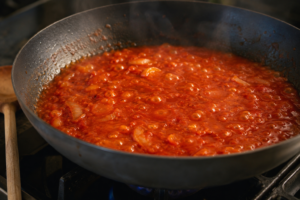
Tip: Should the sauce begin to thicken too quickly, lower the heat slightly. Not all stoves cook the same.
Combine the Pasta, Zucchini, and Sauce
Increase the heat back to medium-high and bring the sauce to a rapid simmer.
Place the cooked pasta and zucchini back into the pan and toss until each strand is coated with the sauce.
Afterwards, check the texture. Should the sauce appear dry or stiff, add some of the reserved pasta water. Start with a little and gradually increase the amount if necessary.
The starch in the pasta water loosens the sauce while allowing it to cling to the pasta.
Simmer the pasta for 1 more minute. The sauce should become glossy and lightly coat the strands rather than appear watery.
Turn off the heat once everything combines.
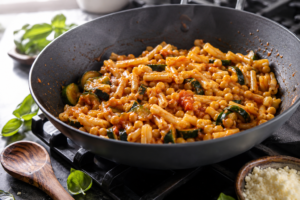
Tip: Never add cold pasta water to a sauce. It alters the taste and reduces its thickness.
Finish with Fresh Basil and Drizzle With Olive Oil
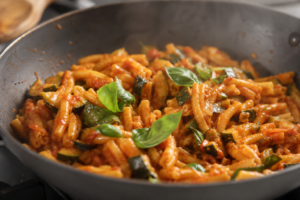
Toss the fresh basil and black pepper over the hot pasta. Right before serving, drizzle the dish with extra virgin olive oil for garnishing.
The basil leaves wilt instantly in hot pasta, releasing a fresh aroma. The combination of garlic and oregano with fresh basil makes this dish smell reminiscent of an Italian kitchen.
Serve the pasta hot while retaining the firmness of the zucchini and glossiness of the sauce.
Mistakes to Avoid
Overcooking the Pasta
This is because the pasta appears slightly underdone upon straining. Remember, the pasta cooks further when mixed with the sauce. Always keep it al dente before mixing.
Letting the Zucchini Become Mushy
Zucchini cooks quickly and will release excess water if left in the pan for too long. Brown the zucchini only until lightly browned while retaining a slight bite.
Burning the Garlic
The garlic burns quickly, reducing the overall taste. Keep the heat low while stirring occasionally. Immediately lower the heat if the garlic begins burning.
Using Excessive Pasta Water
Too much pasta water makes the pasta sauce watery. Add it little by little throughout the cooking process.
Ignoring the Taste Test Before Serving
Pasta water already contains salt. Therefore, the sauce may be saltier than anticipated once completed. Taste it before adding more.
Methods to Change It Up
Adding Some Spinach or Kale
Sometimes I add a couple of handfuls of spinach or kale right towards the end. The warmth wilts the greens without altering the taste.
Substituting Other Beans
Any type of white bean works well in this recipe. Cannellini or butter beans produce a creamier sauce with a richer taste.
Making It Spicier
Should you find yourself cooking this pasta on a colder night, you may double the chili flakes. The spiciness pairs well with the sweetness of the zucchini and tomatoes.
How to Store & Serve
This pasta sauce stores exceptionally well, allowing you to prepare ahead of time for your meals.
- Room Temperature: 2 hours
- Refrigerator: 4 days
- Freezer: 2 months
To reheat, add a small amount of water to the pasta before reheating it in the microwave or on the stovetop. The sauce will appear thicker once refrigerated.
I found that this dish tastes even better the next day since the chickpeas absorb more flavor from the tomato and garlic.
Should you wish to serve this dish, it tastes delicious with some warm, crusty bread or a side salad. A generous drizzle of olive oil and additional black pepper before serving will complete the dish perfectly.