Pan-Seared Salmon with Lemon Brown Butter – Crispy, Juicy, and Ready in 10 minutes!
Do you wish there were restaurant-quality dinners you could whip up without breaking a sweat? Then try this pan-seared salmon dish with a lemon brown-butter sauce. The salmon fillets turn into crisp-gold on the outside and moist-flaky on the inside, and that lemon butter sauce tastes like something you’d order in a gourmet seafood spot.
Well, this particular dish became an instant hit with me when I tried to prepare an elegant yet effortless dish during my crazy weeknights. The only problem with my first attempt to create such a masterpiece was that I couldn’t get the butter sauce just right and ended up ruining it entirely. The delicious, nutty,y and rich aroma turned into an unpleasant, burnt smell in a matter of minutes. But now I know what to do to prevent it.
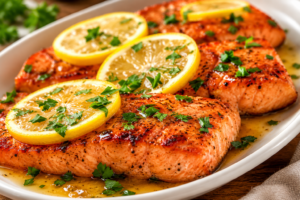
Anyway, the point of this recipe is simplicity, elegance, and minimal effort. Here, in less than 10 minutes, es you’ll have crispy edges, moist fish, bright lemon flavor, and luxurious brown butter. Let me tell you how to cook it perfectly every time you decide to prepare this dish.
Ingredients You Will Need
For the Salmon Fillet
- 1.1 to 1.25 pounds salmon fillets (500-570 g), cut into four pieces
You can choose skinless or skin-on fillets depending on your preference. The latter will require more prep time.
- 1/2 teaspoon salt (3 g)
- 1/8 teaspoon black pepper (0.3 g)
For the Lemon Brown Butter Sauce
- 4 tablespoons unsalted butter (56 g)
- 1 teaspoon lemon zest (2 g)
- 4 tablespoons fresh lemon juice (60 ml)
- 2 lemons
Always use fresh lemons since bottled juice won’t provide you with that rich lemony flavor.
For Garnishing
- 1 tablespoon freshly chopped parsley (4 g)
OR - 1 tablespoon fresh dill (4 g)
It is recommended to garnish salmon fillets with some herbs for more color and delicate notes in this dish.
Get Prepared Before You Start Cooking
Since this recipe is incredibly quick, I always take the ingredients’ preparation seriously by getting everything ready before I start cooking. This was one big mistake I made the very first time – I tried juicing the lemons while the butter was browning and ended up panicking that it was burning.
Sprinkle the salmon fillets on both sides with salt and pepper. They should look lightly seasoned but never heavily crusted.
Then zest 1 lemon until you collect about a teaspoon of it. Notice how fresh it smells! Then juice both lemons into 4 tablespoons.
Dry the salmon fillets with paper towels before frying them. Otherwise, the moisture will cause the fillets to steam in the pan instead of creating that beautiful crispy crust.
Pro Tip: I always leave my salmon out for 10-15 minutes before frying. Otherwise, the cold fish from the fridge will be cooked unevenly and undercooked inside, while being overcooked outside.
Brown the Butter
Place a large pan over medium heat and add butter. A light-colored pan is highly recommended here because it is easier to see whether the milk solids turn golden brown or not. Otherwise, you are at risk of burning them too fast in a dark pan.
Stir and swirl the pan often as the butter melts. First, you’ll notice bubbling, and then small bubbles. Finally, tiny brown bits will appear at the bottom of the pan. At that moment, the butter will acquire a nutty flavor and a warm, toasty aroma.
It usually takes about 5 minutes.
My first success in cooking the brown butter came with a strong feeling of admiration – the fragrance from the butter was so strong that it almost hypnotized me.
Add the salmon fillets as soon as you see golden-brown milk solids appearing at the bottom of the pan.
Pro Tip: Don’t wait too long to add the fillets because butter continues cooking even after it becomes golden.
Fry the Fish
Now place the salmon fillets carefully into the browned butter.
Listen for a sizzling sound as soon as the fish hits the pan’s surface. It indicates that it’s heated well enough.
Let them cook on the first side for about 3 to 4 minutes without flipping. Their edges will turn opaque, and the bottom side of each piece will develop a crust.
Flip the fillets over and cook them another 2 to 3 minutes.
Your salmon fillets should become slightly firm but still moist and tender when you touch them. Inside, the flesh should turn into flaky but not dry pieces.
One thing I used to do wrong was to keep flipping my fish because I thought it might stick to the pan. This way, I prevented them from forming that beautiful crust.
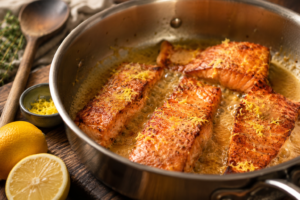
Pro Tip: If the salmon fillets stick to the pan during flipping, give them another 30 seconds of frying before you do anything else.
Add the Lemon Sauce
Add lemon zest and juice during the last two minutes of cooking.
As soon as the juice hits the hot butter, you will notice how it foams and starts bubbling. Your kitchen should fill with a wonderful aroma of lemony-buttery sauce.
Swirl the pan continuously with a spoon, making sure that the salmon fillets are coated well with the sauce. Notice how juicy and flavorful the fish becomes at the end of cooking.
The sauce should be balanced – rich because of butter flavor, slightly nutty, and full of lemony nuances, but not overly sour.
If the lemon butter sauce fills the air in your kitchen with its fragrance now, you are doing everything right.
Serve
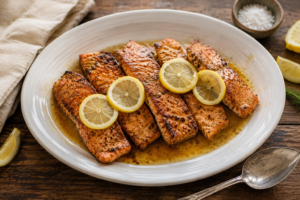
Transfer the salmon fillets to a plate immediately after they become fully cooked.
Pour the sauce generously over the fillets, adding it as a topping. No leftovers are allowed!
Garnish the plate with finely chopped herbs,y or dill. You can sprinkle some herbs on the salmon fillets while cooking them as well.
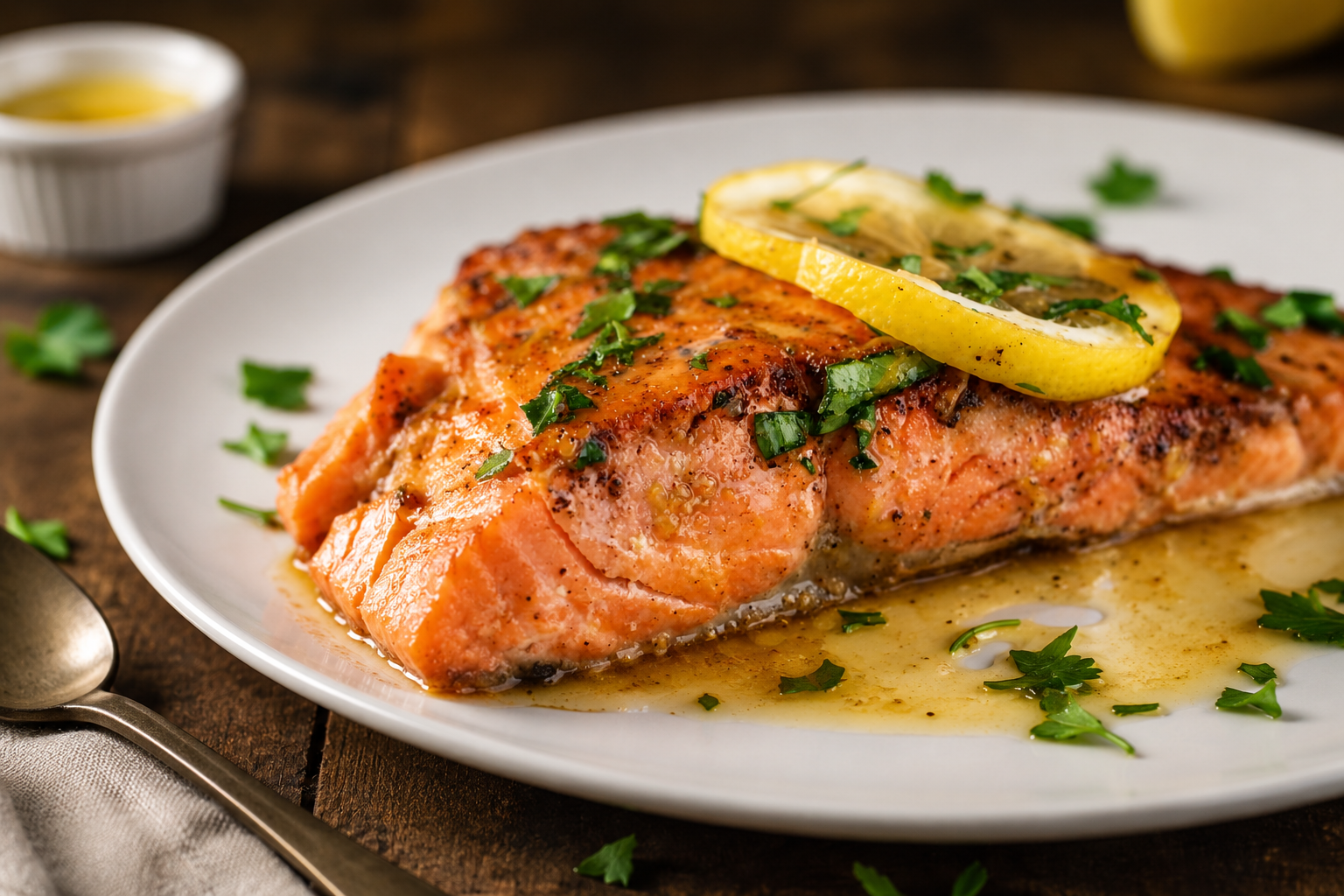
The final product should look glossy, golden, and moist inside. It’s time to slice the salmon and enjoy its flaky and flavorful flesh.
I usually accompany this dish with mashed potatoes, rice, or some crunchy bread, ad which can absorb some of the sauce.
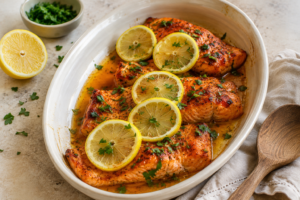
Pro Tip: Make sure your serving plates are warmed before placing the fish on them. Otherwise, the sauce may cool down and thicken.
Mistakes to Avoid
Burning the Butter
The process of brown butter cooking goes pretty fast, so don’t be distracted by anything else and pay attention to the smell and appearance of the milk solids.
Frying Cold Salmon Fillets
Always let the fillets come to room temperature before frying them so they cook evenly.
Overcrowding the Pan
Too many fish pieces will lead to steaming in the pan. Make sure you fry them individually in a large pan.
Overcooking the Fish
The salmon will keep cooking for a while even after you remove it from the pan. Cook them until they become flaky and tender.
Using Bottled Lemon Juice
Fresh lemons provide the dish with a unique and intense flavor that cannot be achieved by bottled products.
Ways to Change the Recipe Up
Adding Garlic
One clove of finely minced garlic is great if you want the sauce to have a more savory taste without becoming sour because of the lemon juice.
Adding Fresh Dill
If you prefer a more traditional flavor of salmon, replace parsley with fresh dill. You can add it to the sauce or sprinkle it on the fillets.
Making the Dish Spicy
A pinch of red pepper flakes in the sauce will make your salmon fillets spicier and more flavorful. Be careful, though,h and add spices gradually.
How to Store and Serve?
Cooked salmon fillets will last up to 3 days in the fridge in an airtight container. Reheat them in a pan with a small amount of water or butter. If frozen, they will last up to 2 months, hs but the taste won’t be the same.
If you wonder how to use leftovers,s – the simplest idea that comes to mind is to enjoy your salmon chilled over a refreshing salad the next day.
The best companions to pan-fried salmon include:
- Roasted asparagus
- Garlic mashed potatoes
- Steamed rice
- Crispy baby potatoes
- Green salads
- Crusty bread
And now it’s your turn! Have you tried to prepare this salmon dish at home? How did you find the results?