Breakfast Casserole – Cheesy, Flavorful, Hearty, and a Hit on Holiday Morning
There are few things better than a warming breakfast casserole in the morning, especially when the holidays roll around. Cooking breakfast for guests who shuffle their way into the kitchen sleepily can certainly be a challenge. But a breakfast casserole solves many problems – crispy potatoes, savory sausage, fluffy eggs, melted cheese, and a blend of seasonings make this meal very hearty and rich in flavor.
I have been experimenting with variations of breakfast casseroles for several years now because I needed an easy Christmas morning breakfast solution – nothing kept at the stove like pancakes. Through many attempts – including some flavorless versions I don’t want to mention – I have finally nailed it. The touch of nutmeg might seem insignificant, but it adds an amazing layer of flavor.
And now it is time to share the recipe for this delicious breakfast casserole that is both cheesy and flavor-packed.
Ingredients
Breakfast Casserole
- 2 cups (255g) diced frozen hash browns
- Diced frozen hash browns work great in this dish and stay firm.
- 1 pound (454g) breakfast sausage
- 1 medium onion (1 cup / 150g), diced
- 1 red bell pepper (1 cup / 150g), diced
- 2 teaspoons (6g) minced garlic
- 2 cups (8 ounces / 226g) shredded sharp cheddar cheese
- Shredded sharp cheddar adds depth of flavor to balance with the eggs’ richness.
- 12 large eggs (about 600g without shells)
- ¾ cup (180ml / 180g) heavy cream
- ¼ cup (60ml / 60g) milk
- 5 dashes Tabasco sauce
- ¼ teaspoon black pepper (1g)
- ½ teaspoon (3g) table salt
- ⅛ teaspoon ground nutmeg (0.25g)
- Just a small amount, but not sweet nor spicy.
- 2 tablespoons (28g) butter, if needed for cooking vegetables
- Butter to grease the baking dish
Prepping the Baking Dish
Preheat the oven to 375ºF (190ºC) while you prepare the baking dish – grease it lightly. Be thorough while greasing, focusing on the corners and sides.
Evenly spread diced frozen hash browns across the bottom of the baking dish.
While making the first version of this recipe, I thought that thawing the potatoes would save us cooking time, but they gave off too much liquid. Keeping them frozen makes them crispier and prevents the whole casserole from becoming too soggy.
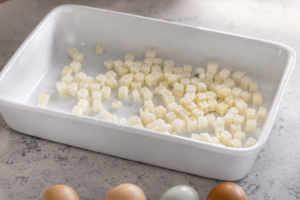
Pro Tip: The baking process is usually slower with glass or ceramic dishes, so check on the casserole a little earlier when using metal bakeware.
Cook the Sausage
Start cooking the sausage in a large skillet placed on medium-high heat. Stir and break up the sausage as it cooks until browned.
At this stage, it smells rich and savory with a peppery undertone. Moreover, there is a constant sizzle noise as the fat gets released.
Use a slotted spoon to put the sausage over the potatoes in the dish, and leave a little fat in the pan.
While testing the recipe, I also tried cooking bacon for the casserole, and while it tastes delicious, sausage provides a balanced taste.
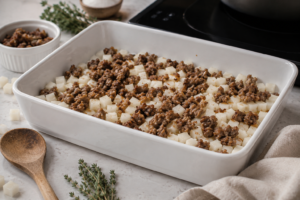
Pro Tip: When the fat starts to brown and smoke, lower the heat to prevent burning.
Sauté the Vegetables
If the skillet lacks enough fat, put the butter in it along with diced onion and red bell pepper.
Stir and sauté the vegetable mixture for about 5 minutes until the onions are translucent and the peppers are soft. By then, the onions should emit a sweet aroma instead of a sharp one.
Then add the garlic and stir for about 30 seconds. As you do that, the smell changes immediately.
Be sure not to burn the garlic, as it quickly gets bitter, and there isn’t any way to fix that. Add the sautéed vegetable mixture on top of the sausage.
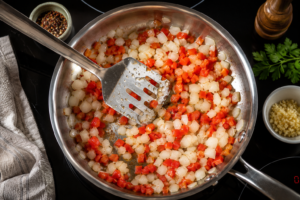
Pro Tip: Cut the red bell pepper into smaller pieces to ensure the casserole is flavor-packed.
Add the Cheese
Sprinkle the shredded sharp cheddar over the sausage and vegetables evenly.
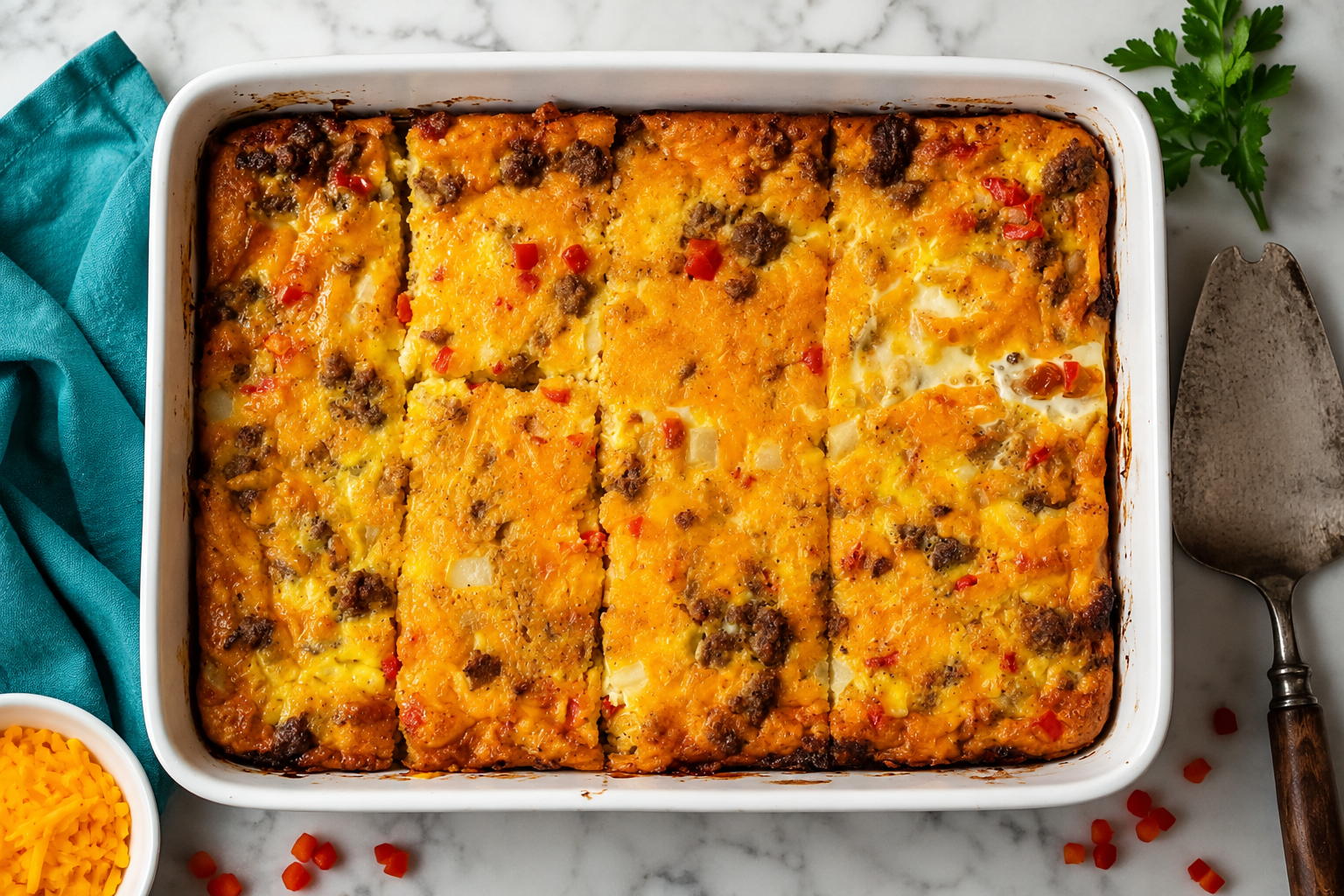
So far, the dish looks so appetizing – golden-colored sausage, peppers, and cheese layers.
Carefully mix all the ingredients in the dish.
I recommend shredding the cheese by hand if you can, as it melts perfectly. Store-bought shreds have anti-caking additives that might alter the texture.
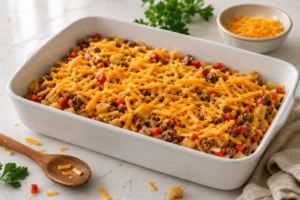
Make the Egg Mixture
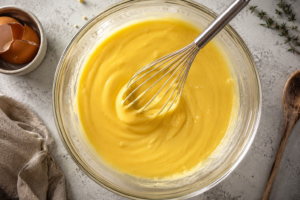
In a large bowl, crack the eggs and whisk them well before adding anything else. Then add the heavy cream, milk, Tabasco sauce, black pepper, salt, and nutmeg.
Mix well until smooth, the color changes to pale yellow, and the surface appears slightly frothy.
Don’t underestimate the power of that small amount of nutmeg – while not noticeable on its own, it gives a background note to everything else.
The first time I made this recipe, I skipped adding the nutmeg. Then, I found out that the absence of it lowers the casserole’s flavor quality.
Pro Tip: Eggs should be brought to room temperature before mixing, as it helps whisk them better.
Assembling the Casserole
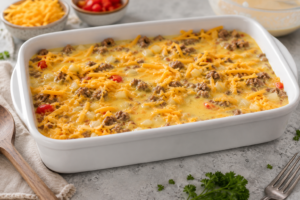
Pour the egg mixture over the dish slowly and evenly.
All eggs naturally settle into all gaps formed by potatoes, sausage, and vegetables. Gently stir the mixture to distribute all ingredients.
By this time, the dish will seem rather packed, but it will all bake down nicely.
Bake Until Set
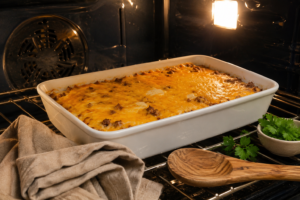
Place the dish in the middle of the oven and bake for 40 to 45 minutes uncovered.
During baking, a savory smell permeates the kitchen. Also, the edges of the casserole puff up a little.
The dish is ready when almost set, with a tiny jiggle left in the center. With an instant-read thermometer inserted, the internal temperature must be 165ºF (74ºC).
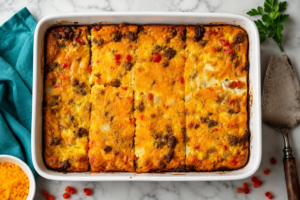
Let it rest for about 10 minutes before slicing.
Common Mistakes to Avoid
Using thawed hash browns
They release too much liquid and create soggy textures, so keep them frozen.
Overbaking the casserole
Eggs are known to cook further after removing the casserole from the oven, so take it out when it’s still a tiny bit jiggly.
Burning the garlic
It requires minimal cooking time, and once it emits the aroma, remove it from the skillet.
Insufficiently seasoned eggs
Eggs should be well-seasoned to bring out the flavor, so add salt, pepper, Tabasco, and nutmeg.
Slicing the casserole prematurely
It will fall apart easily, so let it cool for some time to set properly.
Variations
Replacing the Sausage with Bacon
It goes wonderfully here as a smoky alternative. Make sure it is crispy before crumbling over potatoes.
Adding Other Vegetables
Such veggies as spinach, mushrooms, or green onions are great additions. Mushrooms have to be cooked first to drain the extra moisture.
Using Different Cheeses
While classic, sharp cheddar can be substituted with Gruyère or pepper jack cheese for a more pronounced taste.
Storage and Serving Instructions
This breakfast casserole is easily stored and reheated, so it is perfect for meal prepping.
Storage
Refrigerator: covered for up to 4 days.
Freezer: wrapped portions for up to 2 months.
Reheating
Microwave or bake at 325ºF until heated through.
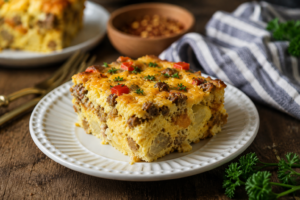
This dish can be eaten cold or reheated; it is always delicious, though warm is preferred. It is best served with fresh fruit, coffee, or hot sauce.
This breakfast casserole disappears quite fast whenever I serve it – everyone goes for seconds long before I join the meal.
Hope you’ll find this recipe as tasty and useful as I did!