Cinnamon Rolls – Light, Fluffy, and Coated with Cream Cheese Frosting
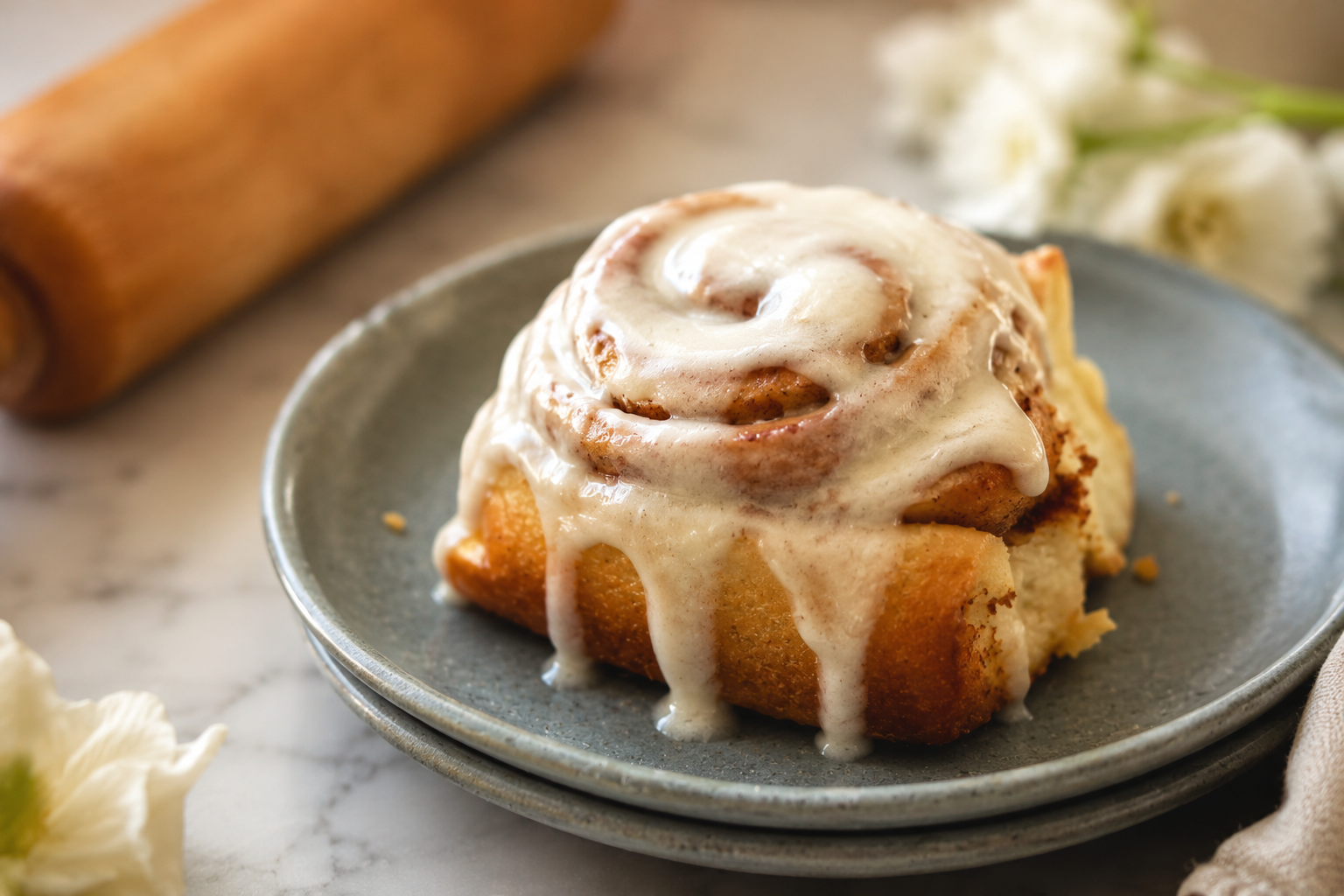
Who doesn’t love the magic that happens when you put a plate of freshly-made cinnamon rolls on the table? As if on cue, family members and friends gather around and wait eagerly, trying to guess when they’re going to get their delicious bite. But there’s a whole lot of difference between store-bought and homemade rolls. Homemade cinnamon rolls have a soft, flaky crust and a gooey cinnamon filling. If you’ve only had the former, you’re missing out!
Years ago, when I decided to make homemade cinnamon rolls, I tried to make them quickly, skipping one of the most critical stages of rising. My cinnamon rolls tasted good enough, but they were far from ideal- not soft and light. But after learning how to rise the dough properly, everything turned for the better.
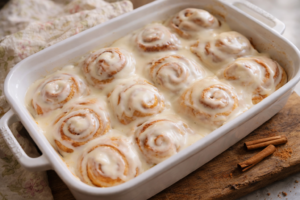
In this post, I’m going to share with you how to bake those amazing cinnamon rolls. They are buttery, soft, full of cinnamon and sugar, and generously coated with cream cheese frosting.
Ingredients for the Dough
- 1 cup warm milk (240 ml/240 g), about 110°F (43°C)
- 1/4 cup granulated sugar (50 g)
- 2¼ tsp active dry yeast (7 g)
- 4⅔ cups all-purpose flour (560 g)
- 1/3 cup light brown sugar (73 g)
- 1½ tsp salt (9 g)
- 1/2 tsp ground cinnamon (1 g)
- 1/2 cup unsalted butter, melted (113 g)
- 1 large egg (50 g)
- 1 tbsp vanilla extract (15 ml)
Active dry yeast – I’m using active dry yeast, not instant, as the dough has to undergo two rises.
Ingredients for the Cinnamon Filling
- 1/2 cup light brown sugar (110 g)
- 1½ tbsp ground cinnamon (12 g)
- 6 tbsp very soft unsalted butter (85 g)
Butter must be very soft here, or the cinnamon rolls won’t turn out well, as you’ll tear the dough when you’re working with the filling.
Ingredients for the Cream Cheese Frosting
- 2 tbsp unsalted butter, softened (28 g)
- 4 oz cream cheese, softened (113 g)
- Pinch of salt
- 1 tsp vanilla extract (5 ml)
- 2 cups powdered sugar (240 g)
- 1–2 tbsp milk (15–30 ml)
Cream cheese has to be soft, ned, as it might lead to lumps in your cream cheese frosting.
Activating Yeast
Pour the milk into the bowl of a stand mixer and stir granulated sugar and active dry yeast.
Allow it to sit for 5 minutes. Then stir again. You will see that the surface becomes frothy and bubbly. Also, it should smell slightly like yeast.
I used active dry yeast for the first time in my life and didn’t realize that this process was necessary. And since I had old yeast that was completely dead, the rising process failed. From that day onwards, I always check if it’s ready before mixing.
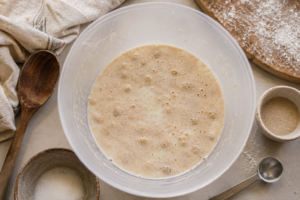
Pro Tip: Make sure you’ve rinsed the bowl with hot water first because the mixture needs warmth.
Preparing Dry Ingredients
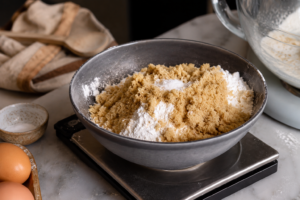
While the yeast activates, whisk together flour, brown sugar, salt, and ground cinnamon in a large bowl.
Press down any brown sugar lumps with your hands. Lumps will create cavities in your cinnamon rolls, and that’s not something we want.
At this point, it smells lightly sweet with a hint of cinnamon. You will see why in a bit!
Forming the Dough
Put the activated yeast mixture into the bowl with flour and the rest of the ingredients.
Pour in melted butter, egg, and vanilla extract, and mix on a low speed until it starts forming.
Increase the speed to medium-low and continue kneading the dough for 8-10 minutes.
It should become soft, elastic, and slightly sticky. You can easily press a finger into it without leaving marks.
Here’s the part where you can benefit from having some baking experience. As the dough looks wet, most people usually add more flour to it. However, the less flour you have, the softer your cinnamon rolls will be.
Pro Tip: Try to use the least amount of flour necessary to form the dough. Otherwise, cinnamon rolls will be dense.
Dough Rising
Pour a tiny bit of olive oil on the bottom of a large bowl. Put the dough in it.
Toss the dough gently to coat it with oil evenly and cover the bowl with a clean piece of cloth. Place it in a warm place and let it rise.
It should rise for 1½ to 2 hours and double in volume.
After that period of time, you will notice that the dough becomes a real pillow. You can press it with your hand; it will slowly come back to its initial shape.
Now the dough has a rich aroma, and you can clearly smell butter and sugar.
Preparing the Cinnamon Filling
After 1½-2 hours pass, it’s time to prepare the cinnamon filling. Whisk together brown sugar and cinnamon.
Mix them evenly.
This mixture seems rather ordinary, but the results are amazing! I always remember the taste of homemade cinnamon rolls after that. Also, if you wish, you can replace brown sugar with finely chopped toasted pecans, orange zest, cardamom, or allspice.
Pro Tip: If you don’t need cinnamon immediately, store it in an opaque glass bottle.
Making Dough Sheet
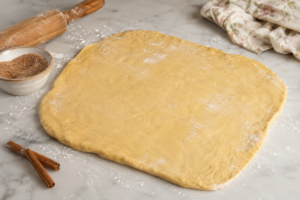
Flour the countertop.
Put the dough on it and roll into a 12 x 24-inch sheet.
First, use your hands to shape the dough, and then proceed to rolling. It will be easier and faster.
The dough will become elastic and easy to handle.
Pro Tip: To avoid sticking to the countertop, keep the dryest side in contact with it.
Spreading the Butter and Cinnamon Filling
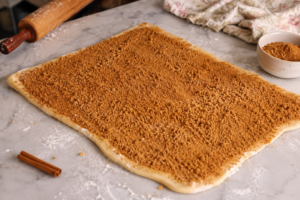
Smear butter evenly over the sheet, leaving 1/2-inch wide margin.
Then, sprinkle it with the cinnamon mixture.
Butter has to slide across the sheet. If it doesn’t happen, the dough is cold, and it needs a bit of warmth.
Now the mixture smells like heaven!
Rolling and Cutting
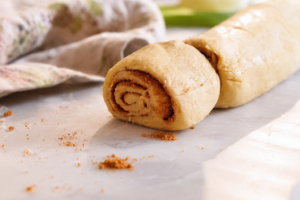
Roll up the sheet of dough starting from its long side.
Tighten the dough as you go for neater rolls.
Slice the rolls into 2-inch-wide pieces.
To do it neatly, use dental floss or kitchen string. Slip it under the rolls and cross its ends. Pull!
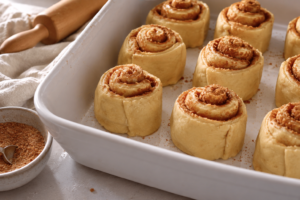
Now you can put the rolls in a greased 9 x 13-inch baking dish, allowing them to touch each other slightly.
Second Rise
Cover your baking dish with a clean piece of cloth.
Leave cinnamon rolls to rise for about 1 hour or until they nearly touch each other.
Thanks to the second rise, cinnamon rolls become fluffy and light.
Pro Tip: Keep cinnamon rolls near a slightly warm oven to help them rise.
Baking
Preheat your oven to 350°F (175°C).
Bake cinnamon rolls for 20-25 minutes.
When it’s done, the rolls will be puffed and golden on top. Your kitchen will smell fantastic!
Don’t bake the cinnamon rolls more than necessary. If you do, they’ll be dry inside.
Making the Frosting
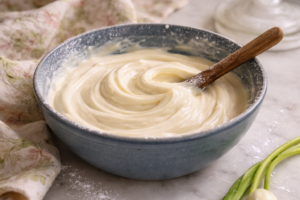
While cinnamon rolls are baking, beat softened butter, cream cheese, salt, and vanilla extract.
Gradually stir in powdered sugar.
Add milk, stirring vigorously. Continue stirring until the frosting gets smooth and creamy.
It should be slightly thick, but still spreadable. I prefer my frosting soft to get those gooey spots.
Coating the Cinnamon Rolls
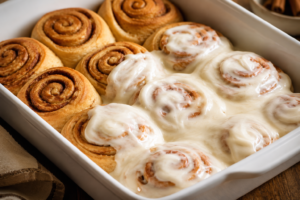
As soon as cinnamon rolls leave the oven, start spreading frosting on them.
You can easily see how it melts, covering cinnamon rolls with itself.
After that, let cinnamon rolls cool off a bit and coat them with the remaining frosting.
The sight of frosting slowly sinking into cinnamon swirls is fantastic!
Mistakes That Will Ruin Your Cinnamon Rolls
Using Dead Yeast
The yeast doesn’t activate in about 5 minutes and doesn’t create any froth. Start the recipe with new yeast.
Using Too Much Flour
It makes cinnamon rolls dense and dry. Leave the dough slightly wet and sticky.
Skip the Second Rise
Without it, cinnamon rolls won’t be light and airy.
Using Cold Butter
Use warm butter to spread it.
Overbaking Cinnamon Rolls
Just a couple of extra minutes can ruin the texture of cinnamon rolls.
How to Change It Up
Add Toasted Pecans
Toasted pecans in the filling give additional flavor and crunchy texture.
Use Orange Zest
It will give your cinnamon rolls an aromatic flavor that goes great with cream cheese frosting.
Spice it Up
Instead of regular ground cinnamon, use allspice or cardamom.
How to Store and Serve
Keep the cinnamon rolls at room temperature in an airtight container for up to 2 days.
For storing cinnamon rolls longer, store them in the refrigerator for up to 5 days.
You can also freeze the rolls. Unfrosted cinnamon rolls can be stored for up to 3 months.
My favorite thing to do with cinnamon rolls is to heat them a bit and eat them with a cup of coffee.
Frequently Asked Questions
Can I Make Cinnamon Rolls Ahead of Time?
Yes. Form the dough into rolls and refrigerate it overnight before baking.
Why Didn’t the Dough Rise?
Either the yeast is dead, or the temperature is too low in your kitchen.
How Can I Freeze Cinnamon Rolls?
Yes. Store frozen for up to 3 months in a freezer-safe bag.
Can I Use Instant Yeast?
Instant yeast works fine, but the results will differ.
How Do I Keep Cinnamon Rolls Soft?
Never add too much flour, and never overbake.
Homemade cinnamon rolls are so good that I can make them every week without getting bored. Not to mention, my family loves to gather around the table with a plate of cinnamon rolls. If this sounds nice to you, you’ll find the recipe below useful.